Showing posts with label MITinquiry2018. Show all posts
Showing posts with label MITinquiry2018. Show all posts
Monday, 26 November 2018

Thursday, 1 November 2018
Tuesday, 16 October 2018
MIT Tool - Reflecting
What research/evidence are you using to back up what you are doing?
I am using the research from Auckland University, with their developing in digital worlds- The project started in 2014 and will be completed by September 2018.
The research aims to answer three questions about cognitive and social development in digital environments:
How does participation in the digital world influence children’s cognitive and social development?
What skills, knowledge, and capabilities do children need to manage, engage and benefit from participating in the digital world?
How can family, educators and society effectively support children’s involvement in the digital world?
https://developingindigitalworlds.blogs.auckland.ac.nz/
Are the students engaging differently using the tool?
My students are not engaging with the tool as such. As the tool is designed for teachers and parents. The students are engaging in the Argumentation boards- It is helping them to gain more critical thinking skills. I find that students of all abilities can enter into the learning and are able to take the learning to their own level. The teacher is then able to 'push' those who can be extended.
What hypotheses have you formed about likely barriers or your teaching actions to accelerate learning?
The tool breaks down the barriers that teachers have thinking they don’t know how to do it, or where to start. The board examples and videos give teachers basic tools to just have a go.
Have you noticed any anomalies in how it is/not working? Is it the same for everyone - or some? Why might that be?
My whole senior school have been using argumentation boards as a way to teach students to think critically, develop skills around self reasoning and take part in critical literacy. Across our classes we have all seen the benefits of using the argumentation boards. We took part in the developing digital worlds research project in both 2014 and in 2018- so it will be interesting to see the comparable data when it is released.
What do you hope to achieve with this tool?
I hope to give teachers a resource that will enable them to have a go at this way of teaching. After modeling to my BT last week how to run an argumentation session she was able to clearly see how to do it, and reflected on some strategies that she would be able to implement in her classroom.
What KCs will this tool foster?
Thinking- Students are given many opportunities to think critically and deeply about a range of topics.
Relating to others- Students are required to understand others opinions and relate to them
Using language, symbols, and texts- Students are required to explore a range of texts in order to draw conclusions.
Managing self - Students have to manage themselves in order to take part in the critical reading and literacy required.
Participating and contributing- Students are required to participate and contribute within the argumentation boards.
The tool incorporates all KC.
Tuesday, 4 September 2018
MIT Tool Development
Today has been a day of reviewing and developing my tool. This has been one of the most successful days working on my tool. As I progressed it made more and more sense and came together.
I have extended the content from only having board examples and question prompts. Below is my website layout. The website is yet to go live as I want to get a few more videos up.
Homepage:
The What? The why? The how? and about me.
I am going to add pictures of students to this page as it is not very visually appealing.


I have extended the content from only having board examples and question prompts. Below is my website layout. The website is yet to go live as I want to get a few more videos up.
Homepage:
The What? The why? The how? and about me.
I am going to add pictures of students to this page as it is not very visually appealing.

Page 2
The Boards- Examples of boards with links to make a copy. At the bottom of this page is a google form that other teachers can submit their boards onto the site.

Page 3: Question Prompt- This page has question prompts that link to videos of the students using them. ( Still, need to get that video footage). Michelle ( My principal suggested a link so that teachers can access these prompts to save onto their drive or print)

Page 4: Example of what argumentation looks like in my classroom. I have One example but will be filming more as part of my class on air that I can use too.

Page 5: Students Blog Example- This will have links to students blogs showing their argumentation boards. A way for teachers to see the ways my students have shared their learning and thinking.

Page 6: Creating your own board. This page has links to website and search engines that I use to find my text content. It also has a checklist with ideas to think about when designing your own boards.


Monday, 20 August 2018
MIT - Clarelle's Blog Post on my Tool
Below is Clarelle's Blog post about my tool, see her Blog Post here.
Today the MIT teachers had another wonderful day at KPMG. As part of our day we explored our inquiry projects and talked about our next steps for amplifying these inquiries.
Rebecca's inquiry focuses on increasing critical literacy in her classroom through argumentation. She has also been using a range of prompts to support critical and inclusive discussion in her classroom.
Her tool focuses on sharing the prompts and the discussion boards that she has used to provoke critical thinking.
Some of the collective feedback for Rebecca was to provide more description of how teachers can effectively engage students in using the discussion boards. We also suggested that she adding an about this tool page to provide more support for the users of her resource.

Today the MIT teachers had another wonderful day at KPMG. As part of our day we explored our inquiry projects and talked about our next steps for amplifying these inquiries.
Rebecca's inquiry focuses on increasing critical literacy in her classroom through argumentation. She has also been using a range of prompts to support critical and inclusive discussion in her classroom.
Her tool focuses on sharing the prompts and the discussion boards that she has used to provoke critical thinking.
Some of the collective feedback for Rebecca was to provide more description of how teachers can effectively engage students in using the discussion boards. We also suggested that she adding an about this tool page to provide more support for the users of her resource.

MIT Tool Feedback - Zac
Movie Making
Zac presented his Tool on our MIT day out at KPMG. Zac's tool is an interactive website that is all about 'movie making' as a means to improve student achievement in writing. Zacs site has four main sections; How to videos, Film techniques, Teaching strategies, Graphics & Images. Each section has examples and videos made by the students in his class. Zac's site has a great flow- making it easy for teachers and students to use.
The tool is a one-stop site for everything movie making- from storyboarding, to editing using iMovie. It is a great place to learn more or to start out!!
Next Steps:
- State on the site that the students have created the videos.
- Give more information on how he manages the students and what he does as the teacher when they are filming.
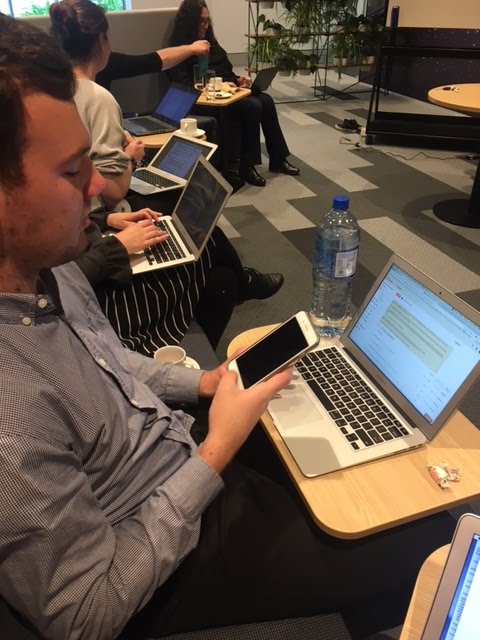
MIT KPMG Session 3
KPMG Session Three
Feedback/ Next Steps:
-Includes mini lesson Plans with each argumentation board
- 'About this site' -blurb + short video. ( The why? Whats the deal with argumentation boards and critical literacy?)
-Site flow: The site will be in three parts.
Part One- Argumentation Boards + teacher notes.
Part Two - Prompts - Each question prompt will have a link with a short video showing how students use that particular prompt.
https://developingindigitalworlds.blogs.auckland.ac.nz/
Feedback/ Next Steps:
-Includes mini lesson Plans with each argumentation board
- 'About this site' -blurb + short video. ( The why? Whats the deal with argumentation boards and critical literacy?)
-Site flow: The site will be in three parts.
Part One- Argumentation Boards + teacher notes.
Part Two - Prompts - Each question prompt will have a link with a short video showing how students use that particular prompt.
https://developingindigitalworlds.blogs.auckland.ac.nz/
Thursday, 16 August 2018
MIT Tool
As the end of the year creeps up, I have been thinking about my 'Tool' for my MIT Inquiry. This year I have explored multiple options and ideas- each with its own advantages and disadvantages. I have to constantly take myself back to my problem; Student achievement in literacy. As my students have begun making accelerated progress I have reflected on the what? and how? What has made this shift and how has it helped them. I have changed many aspects of my literacy programme this year to suit the needs of my learners. The biggest change has been the use of argumentation boards to prompt critical literacy, critical reasoning and evaluating texts at a deeper level, and also my pedagogy has developed through my developing digital worlds PD.
Tool:
My tool idea has been to create a resource bank of Argumentation Boards- to allow other teachers to use the resources that are already made. Sometimes the problem for teachers to give it a go is they don't know where to start. So I am wanting to have a place where the can view and copy our argumentation boards.
Hurdles:
- How will the site update? How can I ensure that it is added too?
- How can I ask other teachers for their resources to add to it?
- Should I include reflections on each argumentation board... What worked?
- Could I add question cards as a resource?
Tuesday, 24 July 2018
MIT Half way point
As term three has started I am currently at my halfway point for my MIT Inquiry. I have spent the first half of the year researching and trialing the best ways to effectively teach literacy. After comparing my Asstle data from the start of the year to the end of term 2 there was a shift in my students progress. This shift I believe was due to; reciprocal reading practices being implemented, and the use of argumentation strategies.
Score
|
Consistent Gaps
| |
A
|
2P
|
Find, select and retrieve information
Make inferences
Respond using understandings and information
Skim and Scan for information
Knowledge of Vocabulary
Identification and understanding of main ideas.
|
B
|
2P
| |
C
|
3B
| |
D
|
2B
|
The tool I am wanting to design is a website which will be a resource bank with examples of argumentation boards- to help other teachers develop the skills to use argumentation strategies. I will spend this term focusing on developing this tool, to benefit not only the teachers but the students.
Monday, 9 July 2018
The Power of Possibility - Cultivating a growth mindset in YOUR classroom
The Power of Possibility - Cultivating a growth mindset in YOUR classroom.- Lindsey Wesner
What is a growth mindset? The power of 'yet', using our failures to move forward.
failure is an opportunity to grow
Strategies for a Growth Mindset
- Design Tasks
- Teacher Mindset
- Student Mindset
- Language of possibility
- Praise and Award
- Assessment and feedback
Task Design
How do I create a task and make sure that it is cultivating a growth mindset?
- Clear instructions - set up for success
- Not a ‘recipe’- Giving students choices, ‘openness’, not one route to success
- High expectations-
- Differentiated Pace - Moving away from ‘faster is better’, how are we phrasing deadlines?
- Real-world relevance- getting students ready for the ‘real’ world/ real problems.
- Critical thinking required
- Opportunity for reflection- build it into a task design.
- Choice of product/ output -
- Audience - a Wider audience
- Choice of topic/focus - Choose the challenging focus
- Extension and enrichment - Ninja task/ ninja belt
- Cooperation - multiple perspectives/ challenges our mindset
- Scaffolding
- Value process over product.
- Divergence over convergence - Follow passions/ inquiry
- Assessment methodology- Have to know what success looks like. Co-constructed S.C.
- Goal creation
- Google forms Differentiated Learning - Build a form that helps to scaffold for students depending on their answers.
- Choice boards- Give students OPTIONS. Give students opportunities to demonstrate their understanding.
- Google maps- Map things add notes/links etc
- Draft back extension- Playback of how students completed a task. gives your data/ summary of how much each student has done. Moving away from the product to process.
Part Two
Assessment and Feedback
Why?
Why are we doing assessment?
Assessment FOR learning
Using the suggesting mode
Students need to engage with each comment
Kaizena- allows voice comments on docs!
Who?
Austins butterfly
Peer assessment
Google Form- Create a rubric
What?
Assessing the progress
GROWTH of Learning
Version history - Name the version- First draft / improved/ feedback from Jimmy/ My best work right now.
When?
Where?
Questions over a comment. Questions promote cognitively.
- Ask students questions and get them to respond with a short video. Formative feedback.
What did you find hard about the task?
How did you work well as a group?
How did you solve this question? (Maths)
What do you think the answer is? (Could do for our which one doesn't belong).
Speeches- Looking at different techniques of a speech.

Praise and Award
What are we praising?
Growth Mindset theory- Praise effort and strategy
Ed Tech Summit - Day One
Jessie Lubinsky- Capes not required
Key Note Speaker
20% time- giving students time to follow a project they are interested in. Allows students to follow their passions.
Jessie's school created a fund, where students could apply for money through an innovation fund. The framework of the projects was around 'Improve the school community'.
1. Following their passion
2. Celebrate their Stars - (Daniel Kish Story) "Running into a pole is a rag, but never being allowed to run into a pole is a disaster"- using echolocation to ride a bike. Focus on allowing students to celebrate what they have - give them opportunities to do anything. Project Unicorn (10-year-old girl with one arm created a glitter shooter. "You cant be sad if you're covered in glitter".
3. Honour Individuality -Help students navigate challenges.
Next Steps:
Brainstorm how could we improve our school's environment?
Get ideas from the kids- allow them to follow their projects during their 20% time.

Thursday, 28 June 2018
Observation of Reciprocal Reading
Today I went and observed Dani and a reciprocal reading group.
What I noticed:
Dani encouraged the student to ask questions to each other opposed to her
Encouraging them to google unknown words or answers to questions they have.
The Boss
The Predictor
The Clarifier
The Questioner
The Summarise
The boss sits at the top of the table. The teacher sits as part of the group. This was a big take away for me as I am trying to move away from being the center- and I think where I choose to sit is an important aspect.
The students did a great job of asking questions and answering them. My students are currently writing down questions but I wonder if they should just ask each other. My focus is to get the students to think about the text- maybe there isn't much point getting them to write it down??
It was great for me to see what year 7/8 students are doing so that I can see the next steps for some of my students. I went away thinking I need to play more of a guiding role as opposed to being at the center of my reciprocal reading groups. I am finding it hard to juggle proving teaching and also letting them think for themselves and run the session. Dani had the balance perfect!
Also as students used a strategy it is important to name the strategy. Dani told the students when they used different reading strategies- This would be extremely beneficial to my students so that they actually know and understand what strategies they are using.
This, with my argumentation focus, would help me create a strong reading programme for the rest of the year! And will hopefully see some accelerated progress :)
Monday, 21 May 2018
MIT - KPMG Session Two
KPMG Session Two
Whats working? Students Reading Results are shifting.
Whats not? The tool- I have created a framework to use in reading but feel like I have reinvented the wheel. What I have created is nothing new.
What do I need help with? The framework and getting outside my box. Seeing what other clusters and schools are doing in Reading.
PD- Sheena Cameron Reading comp- Are using her posters to drive my framework thinking.
What questions do I want to ask?
What impact do I have on my learners? Why we believe what we believe?
Student agency
Intrically motivated- believing in them- giving them opportunities to take risks/giving things a go.
Relationship building
Respect and empathy key
Below are notes from the catalyst core education game. Someone was recording what I was saying:
Catalyst - Core Education
TEAM MEMBER: Rebecca (critical thinking in reading
Lots of new learning - but finding that she needs to be careful on who she talks to. And wanting to get out there and visit new ones.
Trialing lots of new things
Feels that it is important to get out of her bubble and go wider and deeper - critical thinking in reading is very important.
Questions.
Where did you get the idea that critical thinking in reading was the way to go - data showed disengagement
This lead to a change in thinking from stem based to reading based as this is where the problem really was. - learning circles creates discussions that will help them. Trialed sentence starters to help scaffold - They still need this so they can experience success.
Research-engaged with - needing to find this - looked at clusters data feedback and looking at literacy - people are having the same problems
Research on reciprocal reading would help. Dani - also Rebecca Jenson - wide and deep text reading.
Also Angela Moala
What might will this mean to students - kids keen, need scaffolding - Fight over roles (good) - them becoming the leaders of their learning - not revolving around the teacher - increase mana no matter what role they take. - Will look at visiting Danny who is doing this reciprocal reading to build
Have you looked at the models you use to teach? Are you explicit? - Not consistently - This can be an area for a big change if you are modeling how it can be done. Co-constructing and what it looks like for them. Struggling with time out of class to ensure that this consistently.
How are we going to learn more about the changes you are making - making blog posts - so far I have been surface but need to go deeper - take some time to focus.
My Who?
- Sally
- Dani- Point England
- Jacinta (Wolf Fisher) Digital world PD - Literacy focus.
The students
-T (ESOL)
-R
-E ( ESOL)
-Ta (ESOL)
Tuesday, 15 May 2018
Analysing Target Students Data
I have got three target students that I am focusing on for my MIT inquiry and my TAI ( within my school). My inquiry is around how I can increase critical thinking in literacy. I completed an asttle Reading test on my class to look at the gaps in their learning.
The gaps for target students:
- Find, select and retrieve information
- Make inferences
- Respond using understandings and information
- Skim and Scan for information
- Knowledge of Vocabulary
- Identification and understanding of main ideas.
So what? What is going to help?
I have created a 'bookmark' to support a Critical Reading approach for the students to use while Reading. The bookmark provides a thinking framework for the students. With a focus on predicting, self-monitoring, questioning and summarising. This reciprocal reading/ critical reading approach will hopefully provide students with a supportive framework. Then I can build on these important strategies in my reading sessions. The next few weeks I will ensure they know how to use the framework effectively and are discussing their ideas within their groups.

What knowledge do I need to know?
- The links between Oral language and Reading. - Will find readings to support my learning.
- Using Universal Design for Learning - This could help with my Reading Programme (I am going to a UDL course today).
Tuesday, 17 April 2018
M.I.T Moonshot
This week I have been thinking about my moonshot inquiry. During my last KPMG session, I changed my focus from STEM to Reading. This was because my student's achievement was low in ALL academic areas- My group and I discussed that If they could read at a higher level this would benefit other curriculum areas.
My new inquiry is 'How can I increase critical thinking in Reading?'
The tool I want to look into creating would be a framework or a rubric that would help my year 5-6 students think critically about what they are reading.
What I want to look into to help me with this?
- Blooms taxonomy
- Comprehension strategies (Effective literacy practices)
- Sheena Cameron strategies and framework.
Connecting my Inquiry to the design thinking process
After looking at Rebecca Jenson's Manaiakalani Inquiry slide I can see that I am planning, trying and innovating. The design thinking framework is helping me create prototypes to support my problem.
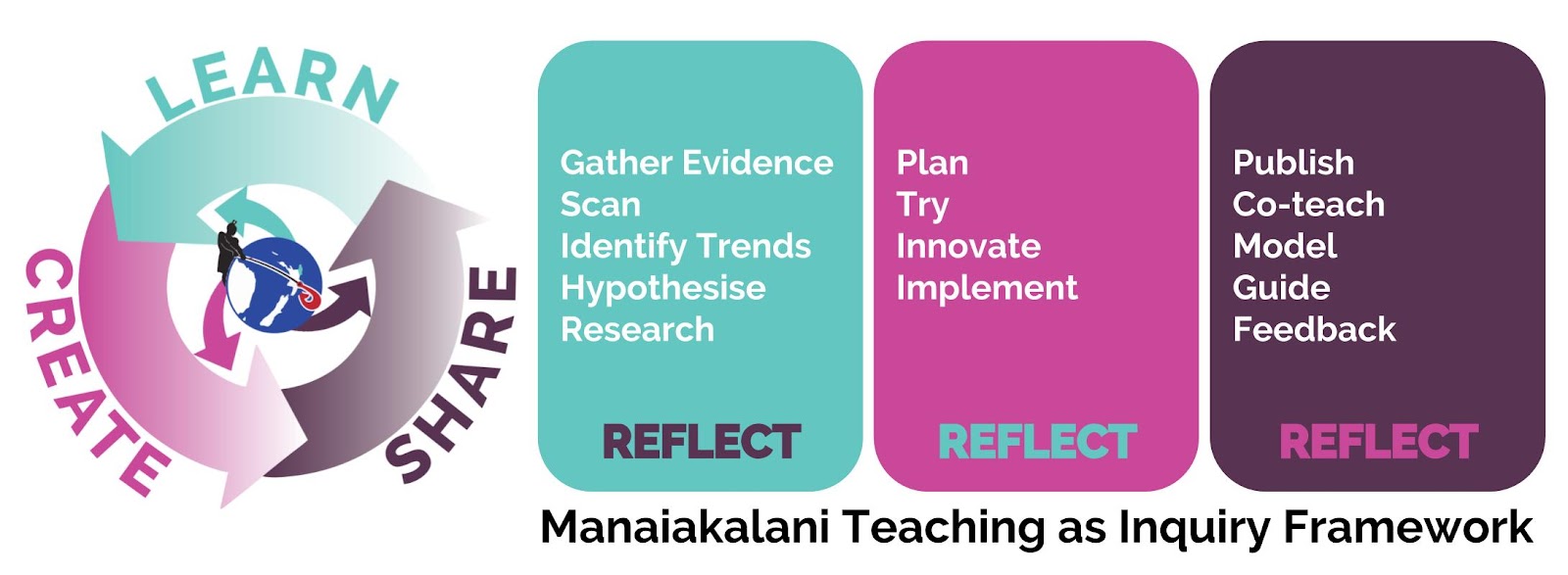
 I am in the process of organizing an observation of another Year 5-6 class at a Manaiakalani School. This will help me think about the level of year 5-6 and compare it to what my students are doing.- this will furthermore support my inquiry.
 Tuesday, 27 March 2018
MIT at KPMG Session One
After looking at my MIT moonshot and questioning my thinking I have decided to change my inquiry.
Working with Justine (a Corporate Citizen at KPMG) and thinking what is my actual problem?
I discovered that my actual problem is low student achievement- I then thought what is going to
be the best solution to my problem. After thinking about all the possible solutions we arrived at
the conclusion that focusing on CRITICAL THINKING within reading (I decided to choose reading
instead of the STEM as my students have two curriculum levels to 'catch up' too. We talked about
reading underpinning most curriculum areas at level 3 as students need to be able to access other
parts of the curriculum through reading. This seemed the most logical place to start if I focus on
critical thinking in reading it will 'spill' into my other curriculum areas too.
Problem: Students are not working at Level 3 of the New Zealand Curriculum
Possible Solution/ Focus: Students need to be able to think critically, a framework will help them do this
and will give them a consistent structure to respond to texts in a critical manner.
Possible Tool: Critical thinking framework for READING. Including all the comprehension strategies that
will allow students to think critically about the text. Students will use the framework to self-assess AND
peer assess.
What will help me develop my tool? Bloom's taxonomy, NZC, Literacy learning progressions, Duffy sheet,
Sheena cameron reading comprehension strategies.
Digital Technologies that will help me?
Site page with links to each comprehension strategy. How to? With a lesson example or teacher model? Videos?
Glossary:
Framework- a basic structure underlying a system, concept, or text.
Critical Thinking- the objective analysis and evaluation of an issue in order to form a judgment.
Problem Solving- the process of finding solutions to difficult or complex issues.
Straight out of the curriculum
"During these two years, students continue to develop their accuracy and fluency as readers of a variety of texts.
They increase their level of control and independence in selecting strategies for using texts to support their
learning. By the end of year 6, students are required to read longer texts more quickly and to select appropriate
strategies for different reading purposes more effectively than students in year 5.
When students at this level read, respond to, and think critically about texts, they will :
-Understand how they select from and use their repertoire of comprehension strategies, which include: making
connections between their prior knowledge and the concrete examples in a text in order to understand abstract
ideas in the text.
-Locating and summarising ideas (e.g., by skimming or scanning, by identifying key words, topic sentences,
and key questions, or by using subheadings).
- Drawing on several related items of information in order to infer ideas and information that are not directly
stated in the text.
-Evaluating and integrating ideas and information across a small range of texts;
Friday, 23 March 2018
M.I.T Inquiry Term 1
After our M.I.T Hui, I re-looked at my student data and gathered more information. The new data that I gathered was interesting and has made me rethink my inquiry focus. My focus was originally on engagement and critical thinking. My student voice data showed that my students are engaged in the learning and motivated. This has been a shift from the end of last year. So in the first 7 weeks this term I have already engaged this group of learners (Which is sometimes half the challenge). So I can now focus on the critical thinking and problem-solving. Possible next focus steps:
- Universal design for learning
- Blooms taxonomy
- Learner-based discussions with a focus on deeper level questioning.
-Rewindable learning
-Reflection on practice
-My knowledge of STEM needs to be upskilled.
-How I can integrate STEM throughout the day?
-Rich tasks- STEM- prompts problem-solving
The STEM element of my inquiry has had a strong science focus this term. Students are enjoying the science experiences and have started asking questionings on their own. The next step will be thinking deeply about these questions and then find the answers. I want the students to drive their own learning and inquiries so they can become lifelong learners.
Below is data gathered in Week 5-6 of Term 1 2018
PAT Maths 2017
|
PAT reading Comp
|
Asttle Writing
| |
R
|
8 / 41 Staine 2
|
10 / 35 Staine 3
|
1A
|
T
|
11 / 41Staine 3
|
11 / 35 Staine 3
|
1A
|
E
|
12 / 41 / Staine 3
|
12 / 35 Staine 3
|
2B
|

Monday, 26 February 2018
M.I.T Hui
Design Thinking
Day One
The Hui started discussing why the MIT programme came about, and why we as teachers are doing this. Dorothy talked about the escalator challenge and how there are two paths on an escalator. Left going up and right going down. This stood as a metaphor for students who have disadvantages in the education system (Health, family, coming to school with less known words.. etc) Meaning that the education system is a lot harder for them, and we as teachers need to help them up to the top by encouraging and supporting them through discovering how they learn best.
The first step in the design process involved learning as much as possible about the problem by understanding both the context of the situation and understanding the problem at hand from the perspective of the “user.” We wrote down 'who' our problem was about, the people involved, who could help us. This was helpful and insightful as it narrowed the people in my circle and those who could help me with the inquiry. We completed a BAR task ( Bigger, add, and replace)
The next step we looked at each others problems and asked why questions. We each had to take up different occupations and asked questions from their point of view. This was hard for me as I kept thinking of questions with a teacher hat, it was a challenge to move away from this point of view.
We then reflected back on our data that we provided for our proposals. We all walked away realizing that we all needed more data. My proposal had data but some was missing due to no data entered last year. My next step will be to gather more student voice for data to help me move forward with my inquiry.
On the second day, we looked at design thinking (Ideation). We did a crazy 8 idea of our proposals. I found this the most beneficial because it made me think of 8 other ideas that I could use for my inquiry. It helped me think more outside of the box and deeper into my inquiry.
Crazy 8
1. Portal of activities
2. Interactive App (Game) Key ideas around problem-solving and thinking critically.
3. Youtube channel (Videos of interesting engaging lessons students can rewind and reflect on)
4. Inquiry learning/ integrated curriculum - real-life tasks.
5. Learning through STEM. Tracking our learning through videos/ pictures/ voice audio/ Can look back and reflect which will be key to critical thinking.
6. Virtual tours (Giving our student's opportunities to think and problem solve)
7.Creating a bank of resources where students can choose their own inquiry.
8. Science in context. Working with engineers to create space crafts etc.
The ones I have made bold are the ones that others in the group thought would help solve the problem in my inquiry.


Subscribe to:
Posts (Atom)