Pages

Wednesday, 27 June 2018

Digital Worlds Session Four

Modeling and explicitly teaching the strategies to answer a multi-choice test

Reflection on making critical reading visible -
-We talked about how our students only read half the answers when doing multi-choice, they just click keywords they see without checking.

We talked about using comprehension short text, multichoice to develop these skills.

Disturbing students thinking
Choose an opposing
Organise prompt cards/signs
Get the students to argue with each other. This prevents the T:S:T response. We are wanting more S:S talking.

Get them to find a text to find out.
Look at the texts- this will tell you a lot about their searching skills
Take the texts (They gave to you) and make an argumentation board.
Get them talking use prompts

THEN Go Meta! (Reflect about what you are thinking/ metacognitive)


Next Steps: Fake News Inquiry Enactment
Idea for next class on-air episode.


Science PD

Lesson Idea: The sun is a star! 

Put your thumb up if you know what is the closest star to earth?
What is it?

Why would we not think that the sun is a star?
When do we see the stars?

Video clip showing 'surface of the sun'
Looked at the different colors of the sun- this was different from their experience of the sun.
What does the sun look like in places around the world?- It can be filtered through distance, air pollution, filters e.t.c

Susan explained this links nicely with our Matariki learning. Try and make links and connections to help students see that learning is continuous.
Video
Song
Teacher support material

**Sun is gas and plasma.
**Sun is now plasma 'superheated gas'.


Making connections is key to allowing students to be able to think. They need to see the relationship between things to help them be able to comprehend.

Lifelong learners.

We discussed teaching as a dance between Conformity and chaos. Students need to move between both in order to progress and develop.


Friday, 15 June 2018

Developing Digital Worlds Session Two

Today we had our second session Developing Digital Worlds Session with Jacinta. Below are the main ideas that I took away:

1.  The importance of 'Activating Prior Knowledge'. We discussed how sometimes this is not given enough time or importance. Using what students already know as building blocks is a critical tool.

2. After having a go with an augmentation board. Evaluate what texts the students were on the most, using the screen time section on teacher dashboard. This will give me a good idea of what text types students are using/ compare to the ideas they are coming up with.

3. Checking that sources are credible and reliable. This is something we have been doing in writing when note-taking. We have been giving a note a tick when we see it in another text. This helps us see what information is reliable as we have seen it in multiple texts.

4. Text sets- Possible the most important aspect of a successful argumentation board. Using a range of texts that offer alternative views.


"How many texts will support the principles of argumentation (below) in your subject area? Rationale?
To be able to substantiate, and evaluate, the integration of claims, reasoning and evidence to support rational decision making or belief, while also giving appropriate attention to counterclaims, reasoning and evidence that informs a critically reasoned conclusion."

Prompts for Attending to Overlooked Evidence:

  • What do you make of this (reference data/information)?

  • What else do we need to take into account?

  • Who has another observation that can help us look at the whole picture?

  • Is there anything we’re missing?

  • Who has a different idea?

I have filmed two class on air episodes using a critical literacy approach with an argumentation board. Click here to see Lesson 6. My next lesson will demonstrate the new skills I have taken from my session with Jacinta; Using alternative texts, focus on APK, prompting questions and less teacher talking, more students thinking! 
.

Tuesday, 5 June 2018

Science Observation

Science Observation (Guided exploration) 

Lesson focus: Notice, Think Wonder. What is happening? (Describe) Why is it happening (Explain) 

Equipment:
Jar
Salt
Oil
Water 
Cloth 

Task: Observe how substances interact together (Liquid into liquid, solid into liquid) 

Get students to describe equipment. Whats the purpose? (This bumps up vocabulary) 
Students took part in looking how to transfer the liquids between containers. Discussed 'half'. Demonstrated solids and liquids and the shape they take.
Give the students opportunities to describe - this gives them more experience doing it. 
Feed in the vocabulary to give students the ability to communicate. 
Students to have a go. Pour the salt into the water. Observe the reaction (Eye level) 
Discuss what happened? Video this and re-watch to pull apart key ideas. 


Staff Meeting Debrief 


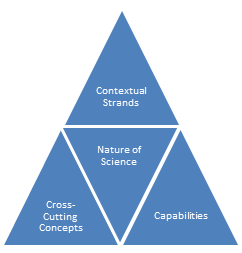
What are cross-cutting concepts- Help students connect ideas from one discipline to another. 

Crosscutting Concepts:
Cause and effect
Patterns
Structure and function
 Systems
Scale
 Change and Stability
 Matter and Energy

Learning science is best supported when instruction interweaves content and concepts from a variety of fields. 
Science is a way of knowing


Next Steps: 

How can I reinforcement the learning?

Think about how students can communicate their thinking with others in the class. Note as a teacher that one student's response is not a confirmation of the lesson or students knowledge. 

Filming parts of the experiment - Reflect on what they can see. Using a video allows you to pause and discuss different parts of the experiment. It's a great way to gather evidence and collect data. 

Thursday, 24 May 2018

Kootuitui Unconference

Yesterday we had our annual Kootuitui Unconference. As a cluster, we came together and had the opportunity to attend toolkits on what we wanted to learn about. It was a great way to share the expertise we have within the cluster in a relaxed way.

Toolkit One

I attend the drone workshop. The presenter discussed using a drone to teach students how to code. He used the app tinker. It was easy to use and allowed students to control the drone from the app. Unfortunately, the drone didn't connect to the app, so we didn't get to see it take off. 


Toolkit Two
I took a tool on using the new google sites. I came ready with how to embed moving pictures onto your site but the needs of the group were different. I had three people attend with questions about using google sites. This was great as I just was able to sit and assist them and it didn't take much time.


Class walkthroughs

Yesterday we had class walk-throughs in our staff meeting. This was a great way to reflect on our space and how we represent our children in our classrooms. It was great to see how much amazing work is going on in all our classes. This gave us all the opportunity to learn from each other. We talked about how our PB4L teaching and learning is visible. How our classroom culture is reflected in the space and how does the space reflect our school?

What next for me?

Although I have examples/ models for students to use I also need more work created by the students. I start could be even taking pictures of them working in science- This gives them more ownership of the space.

I am lucky that I have such a large classroom- but it does swallow up any wall displays I have and it always looks empty. I am going to try and take some of my posters down and replace with students work.

Wednesday, 23 May 2018

Developing in Digital Worlds Session One


What is argumentation? To be able to substantiate, and evaluate, the integration of claims, reasoning, and evidence to support rational decision making or belief, while also giving appropriate attention to counterclaims, reasoning, and evidence that informs a critically reasoned conclusion.
(Kuhn, 2015); Common Core State Standards.


The kotuitui data shows low results in: 
  • Critical thinking in literacy 
  • Discussion 
  • Commenting on DLO

We talked about how we can get students to have more discussions. We need to think of their blogs as a continuous learning journey- a process of learning. Other people can comment and give feedback and the students can better their learning. 

(A blog is a place for the draft- Asking parents if they can you engage in their learning- a Critical piece of work opposed to a finished work) 

Argumentation links cognitive with the social. Developing social skills- Key competencies. 

Thinking of my teaching- When I am planning I need to think to myself 'how much critical thinking was required for the student to create their DLO?' Templates confine students to a certain way of thinking.

To do: 
I want to start my argumentation journey with a text looking at the different perspectives that students could have. Discussing why. Starting  my thinking frame with  Should..... ( That way all students to access in argumentation)