Pages

Showing posts with label Standard6- Teaching. Show all posts

Thursday, 11 October 2018

Prepping for Term 4 2018

The last term of the year!! This year has gone so quickly. I have been given so many amazing opportunities this year, which I am so thankful for- I feel my curriculum knowledge has really been extended and challenged! 

Being a part of the MIT programme and Manaiakalani-Google Class on air has been the best thing for my teaching career. Learning through others and reflecting on my own practice has been a huge game changer! From our MIT Hui to our KPMG meetings and our trip to Sydney. I have been reflecting on what an amazing opportunity it has all been. 

I have loved being a mentor teacher this year and really enjoy working with my BT (Who is amazing! - I am very lucky!!) Being a mentor teacher has also helped me think about the best ways to support others and guide them in the teaching as inquiry process. This has been a good experience to add to my middle management kete. 

SO what?
I have got three more episodes left to film and upload! I have another MIT meeting at KPMG which will help me extend my tool further. (I have more to add to my tool which I will be doing tomorrow).  

I have PD with Susan this term to help extend and refine my teaching in the area of STEM. 

I have seen a shift in my student's achievement and I want that to continue through to the end of Term 4. It will be rewarding to compare the Term 1 and Term 4 student data. 

Reports and testing will be a focus at the start of this term! I had a great turn out for my parent-teacher interviews in the middle of the year so I my goal is to get 100% attendance. 

Continue my goal of integrating Te Reo in the classroom. 


Below are two episodes of my Class on Air that I am really proud of. I feel they encompass what I have been aiming to do with my students. ( Integrating the curriculum effectively and within a real-life context, and allow my students critically literacy opportunities) 


Attack of the Mellinark! 

Tuesday, 5 June 2018

Science Observation

Science Observation (Guided exploration) 

Lesson focus: Notice, Think Wonder. What is happening? (Describe) Why is it happening (Explain) 

Equipment:
Jar
Salt
Oil
Water 
Cloth 

Task: Observe how substances interact together (Liquid into liquid, solid into liquid) 

Get students to describe equipment. Whats the purpose? (This bumps up vocabulary) 
Students took part in looking how to transfer the liquids between containers. Discussed 'half'. Demonstrated solids and liquids and the shape they take.
Give the students opportunities to describe - this gives them more experience doing it. 
Feed in the vocabulary to give students the ability to communicate. 
Students to have a go. Pour the salt into the water. Observe the reaction (Eye level) 
Discuss what happened? Video this and re-watch to pull apart key ideas. 


Staff Meeting Debrief 


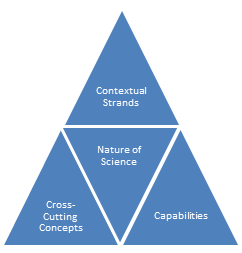
What are cross-cutting concepts- Help students connect ideas from one discipline to another. 

Crosscutting Concepts:
Cause and effect
Patterns
Structure and function
 Systems
Scale
 Change and Stability
 Matter and Energy

Learning science is best supported when instruction interweaves content and concepts from a variety of fields. 
Science is a way of knowing


Next Steps: 

How can I reinforcement the learning?

Think about how students can communicate their thinking with others in the class. Note as a teacher that one student's response is not a confirmation of the lesson or students knowledge. 

Filming parts of the experiment - Reflect on what they can see. Using a video allows you to pause and discuss different parts of the experiment. It's a great way to gather evidence and collect data. 

Wednesday, 23 May 2018

Developing in Digital Worlds Session One


What is argumentation? To be able to substantiate, and evaluate, the integration of claims, reasoning, and evidence to support rational decision making or belief, while also giving appropriate attention to counterclaims, reasoning, and evidence that informs a critically reasoned conclusion.
(Kuhn, 2015); Common Core State Standards.


The kotuitui data shows low results in: 
  • Critical thinking in literacy 
  • Discussion 
  • Commenting on DLO

We talked about how we can get students to have more discussions. We need to think of their blogs as a continuous learning journey- a process of learning. Other people can comment and give feedback and the students can better their learning. 

(A blog is a place for the draft- Asking parents if they can you engage in their learning- a Critical piece of work opposed to a finished work) 

Argumentation links cognitive with the social. Developing social skills- Key competencies. 

Thinking of my teaching- When I am planning I need to think to myself 'how much critical thinking was required for the student to create their DLO?' Templates confine students to a certain way of thinking.

To do: 
I want to start my argumentation journey with a text looking at the different perspectives that students could have. Discussing why. Starting  my thinking frame with  Should..... ( That way all students to access in argumentation) 


Tuesday, 17 April 2018

Term 12018 Reflection

Term 1 

1. Using a Checklist 
This year I have adjusted my checklist process. When students have completed work they add it to a checklist- I comment on it and color the cell so students know what to do next. Green means it is ready to blog. Orange means there is a comment and feedforward, yellow means I can access it. This is making students more accountable. I found this easier than using teacher dashboard because I can see all the students and their work due this week at a glance. 

Next steps: Monitoring my select student's next term who are not getting work done. Giving them two options for the day. Do this then you can do this. Check in with them after every block. 


2. Science
The science learning this year has been fantastic. I have completed about 10 science-based lessons from Susan's bank of lessons. My students are now starting to use their science books in the sessions and their 'me' pages are becoming more developed with their ideas and thinking opposed to pictures or nothing at the start. 
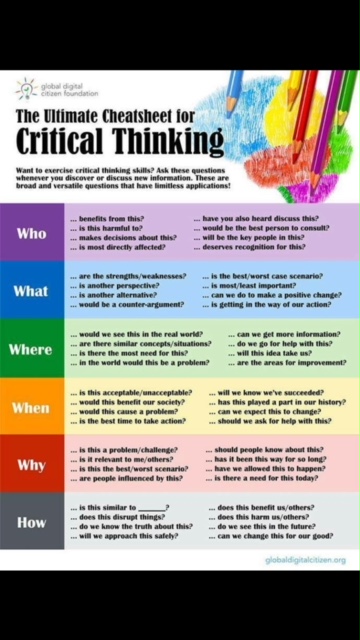
Next steps- Use the question cards during EVERY lesson. Focus on 1-2 a lesson as we work our way through Students will become familiar with critical thinking and the sentence starters help them form sentences.


3. Digital Modelling Books
This term I used a digital modeling book and had documents where students worked collaboratively on. This was extremly effective- The students loved it and they used other students work to support/ help their learning and understanding. I noticed that It worked best in small groups 6-8. I also need to make sure I change the editing rights after the lesson so students can go back and deleted others work. This term I really want to try and use them more. I managed to use it once a week BUT this isn't reflective of how often I taught writing- I need to update the modeling book after every session and ensure students are using it.
Next step: teach students where it is- Constantly refer to it. Get students to look at it when they are stuck.


Thursday, 1 March 2018

School Inquiry

Using STEM to increase engagement, critically thinking and problem solving.


Our school focus this year is 'communicating in Science'. During our inquiry meeting, we discussed target students we had and the data we had collected. Overall we talked about how we all need to collect more data so that our hunches are supported by accurate data. I have decided that I am going to use my MIT inquiry as my school inquiry too. Michelle talked about this being most effective and will allow for a very deep inquiry. I thought about different ways that I could increase engagment and increase critically thinking. We talked about Universal design for learning Vs Differentiated learning. 


What do I need to do now?

My knowledge of STEM needs to be unskilled.
How I can integrate STEM throughout the day?
Rich tasks- STEM- prompts problem-solving 


Friday, 19 January 2018

Mentoring 2018

This year will be my first year mentoring a new beginning teacher. This is her first job out of university, she will be going into a Year 4, 1:1 digital classroom. To prepare myself for the role of 'mentor' I have done some professional readings to enable myself, to give my BT the best start possible to ensure her success. 

"Apparently some of the high-priority needs of beginner teachers are classroom
management, motivating students, differentiating student learning, problems
and needs, assessing student progress, interaction with colleagues and parents,
receiving appropriate advice on school culture, goals and instructional resources,
using effective instructional strategies or methods and emotional support
(Veenman, 1984; Gordon & Maxey, 2000; Senom & Shahratol, 2013).
At some circumstances, even with some efforts, beginner teachers still feel
isolated and hope for individualized precise support to survive the early years
(Lunenburg, 2011). Literatures point out that the environment a beginner
teacher is attached to shapes the quality of the teacher and teaching practices.
Environment is grounded by the culture of the teaching practices and conditions
of the workplace."

The text discusses the needs and challenges facing beginning teachers, it highlights the first five phases B.T will go through.

1. Anticipation—excited about what was learned in pre-service, start their career, anxious.

2.. Survival—faces challenges that were not anticipated in pre-service, over-
loaded with tasks beyond classroom teaching, shocked but need to move on.

3.. Disillusionment—the most challenging phase to survive, learn to cope and
adapt with multiple tasks but even more work piles up, higher expectations
from administrators.

4..Rejuvenation—back into task after a semester break or schools term breaks,
better understanding of their job.

5. Reflection—review what has been completed for the year and plan for the
upcoming year based on the experiences and knowledge gained.

Looking at these phases I can see how they are exactly the phases I went through in my first year. I have seen many teachers in the 'Disillusionment stage' give up and resign. I know it is an extremely challenging phase I need to be aware that when my B.T gets there, that I am giving her strategies to cope and support her. A goal for myself will be not to do things for my B.T or give her the answers- I am wanting to give her many options and allow her to problem solve and make decisions for herself.

Four ways mentors can support new teachers; 
Providing emotional support and encouragement
Giving information about the school’s work style and culture
Promoting understanding of the students and family culture
Providing cognitive coaching ( This will be significant especially in terms of how we teach Literacy, as this is an area that many B.Ts struggles with- we have had lots of PD so I am going to coach my BT through modeling, team teaching, and observations).


Reading:
Vikaraman, S. S., Mansor, A. N., & Hamzah, M. I. M. (2017). Mentoring and Coaching Practices for Beginner Teachers—A Need for Mentor Coaching Skills Training and Principal’s Support. Creative Education, 8, 156-169.